A Trillion-Tenge Reform: What's Behind the Recapitalization of "Baiterek" NMH?
In 2025, "Baiterek" National Management Holding expects one of the largest recapitalizations in its history: 1 trillion tenge. This funding will go towards supporting entrepreneurship, developing housing construction, and implementing key national and investment projects.
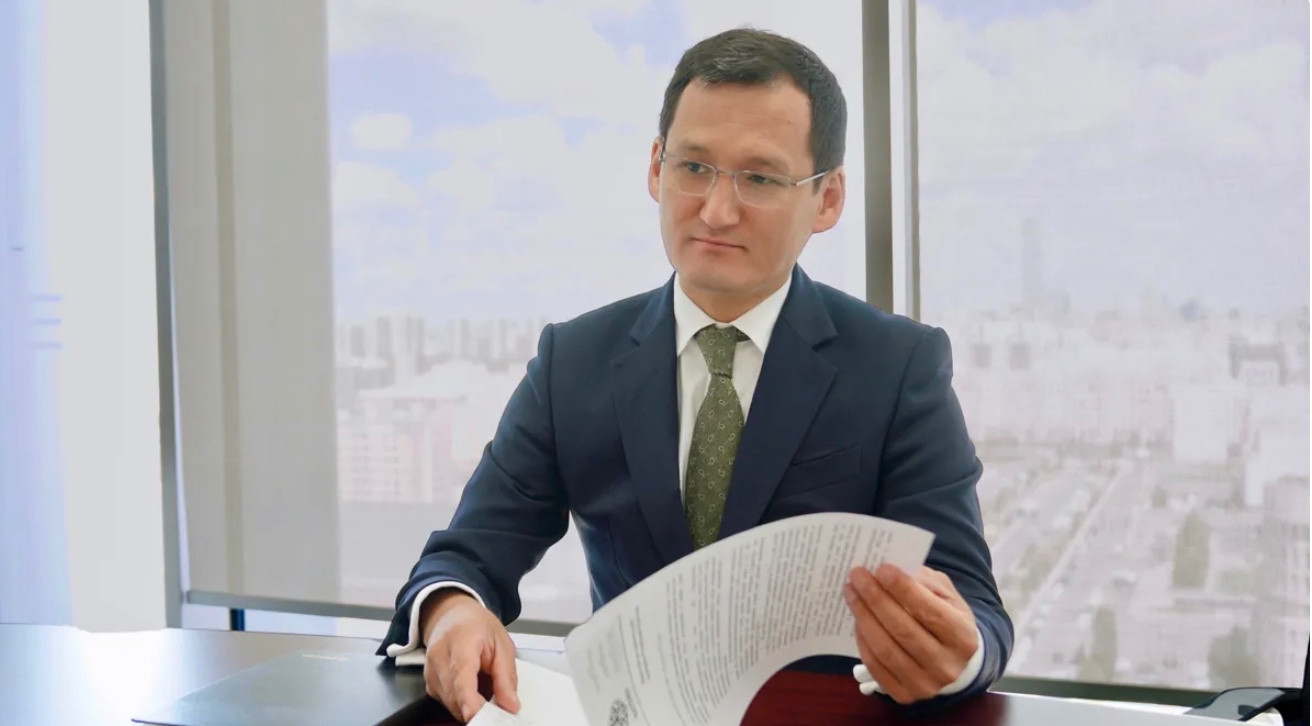
"If support used to be provided through 20 different programs, we've now decided to combine our efforts: to receive direct capitalization and then, from our side, direct resources through our subsidiaries to where they'll have the greatest economic effect," explains Zhandos Shaikhy, Deputy Chairman of the Holding's Management Board.
How "Baiterek" is Relaunching the State Investment Model
This decision, according to the interviewee, wasn't accidental. In 2024, Kazakhstan shifted to a new economic course, setting an ambitious goal for the government: to double its GDP by 2029. To achieve this, as the "Baiterek" top manager emphasizes, the economy needs to ensure stable annual growth of at least 6%.
As Shaikhy notes, achieving such growth requires a significant increase in fixed capital investment, which currently stands at about 15% of GDP. The target, he explains, is at least 25%.
"Against the backdrop of second-tier banks' cautious approach to financing the real sector, the state decided to act as a catalyst for investments, fulfilling this role through the 'Baiterek' holding," says the Deputy Chairman of the Holding's Management Board.
The new model was supported by the government and approved in March 2025. However, a trillion is just the tip of the iceberg.
"The Holding plans to use market instruments in conjunction with state capital. This will allow us to finance projects totaling up to 8 trillion tenge," clarifies Baiterek's Deputy Head.
The mechanism works like this: as mentioned, the holding distributes funds among its subsidiaries. Each subsidiary then attracts additional financing through bond issuance, syndicated loans, private investors, and international financial organizations.
According to Shaikhy, this approach will not only reduce bureaucracy but also allow them to focus on maximizing the multiplier effect: launching industry programs, supporting SMEs, developing exports, digitalization, and creating new production capacities.
He adds that in 2025, they plan to utilize over 4.4 trillion tenge from these new funds, which will cover direct lending for investment projects, leasing, and other forms of support.
Focusing on 60 industries according to the economic activity classifier, "Baiterek" Holding aims to implement 333 investment projects by 2027, totaling over 19.7 trillion tenge. Of this, 11.1 trillion tenge will go towards direct financing. Priorities remain manufacturing, processing, and infrastructure."We don't finance mineral extraction. We strive to diversify the economy. It's crucial to create economic momentum in those sectors where there's a funding shortage and where banks are reluctant to provide loans," explains Shaikhy.
Unified Rate, Massive Impact
Another key task for the holding was to establish a unified rate for end borrowers. "Previously, the 'Damu' Fund subsidized rates down to 5% and even lower. But this put pressure on the budget. We approached a systemic reform: in April, we abandoned rate subsidies and introduced a single preferential rate of 12.6% per annum," notes the Deputy Head of the holding.
According to "Baiterek's" calculations, the reform will allow them to double the financing coverage for SMEs, from 4 to 8 trillion tenge, without increasing budget expenditures.
Loans Without Collateral – A Reality for SMEs
Incidentally, in spring 2025, two new guarantee funds were launched in Kazakhstan, based on the "Damu" fund and aimed at supporting businesses, Shaikhy continues, commenting on the innovations. The First Guarantee Fund (GF-1) is geared towards entrepreneurs whose projects require up to 7 billion tenge in financing. According to him, it offers unprecedented conditions: the guarantee can cover up to 85% of the loan amount, but not more than 3.5 billion tenge.
"Essentially, we're addressing the main problem for small and medium-sized businesses: a lack of sufficient collateral. This is especially relevant for rural entrepreneurs, where asset values are often underestimated, and access to credit is limited despite banks' interest," explains the Deputy Chairman of the Baiterek Management Board.
The second fund (GF-2), however, targets infrastructure and industrial projects with investment volumes exceeding 7 billion tenge. Here, the guarantee covers up to 30% of the project cost for a term of up to 15 years.
"The mechanism is simple: an entrepreneur submits an application for financing to a bank or financial institution accredited within the 'Damu' Fund system. If the bank sees potential but the borrower lacks sufficient collateral, the guarantee fund steps in," says Shaikhy.
Besides second-tier banks, guarantees can also be obtained through "Baiterek's" subsidiary organizations: DBK (Development Bank of Kazakhstan), AIC (Agrarian Credit Corporation), IDF (Industrial Development Fund), and QIC (Kazakhstan Investment Corporation).
Exports reimagined
Another notable transformation within "Baiterek's" strategy is the conversion of KazakhExport into the Export Credit Agency of Kazakhstan (ECA). Shaikhy emphasizes that this isn't just a name change, but a profound institutional reform.
The term export credit agency (ECA) is a universally accepted international designation for organizations that provide state financial support to exporters. Such agencies operate in OECD countries, among the G20, and in other developed economies.
"Now we're playing by international rules. Kazakhstan is an export-oriented country, and such a support structure is vitally important for us," says Shaikhy.
With its new status, the agency gained significantly more capabilities. Now, in addition to insuring export operations, the ECA's toolkit has been expanded with guarantee instruments. These include reducing risks for exporters when signing contracts and providing opportunities to participate in international tenders. Already as an ECA, the company is actively working to increase insurance capacity and reinsurance of risks, and its support instruments have been digitized. This year, the ECA is tasked with increasing the volume of support provided to exporters to 600 billion tenge.
"Our task is to stimulate products with high added value. That's why we need an external market: export isn't just a part of the economic strategy; it's a vital condition for the country's further economic growth," Shaikhy emphasizes. He adds that Kazakhstan is currently working actively to improve its status in the OECD country classifier, which helps to reduce the cost of international financing.
"This could reduce the cost of loans by several percentage points. And when we're talking about billions of dollars, that's tens, if not hundreds, of millions in savings for the country," emphasizes the "Baiterek" top manager.
According to the interviewee, in line with the holding's new strategy, all dividends from subsidiary companies will be directed towards implementing projects outlined in the 8 trillion tenge capital investment program.
"Our goal is not just to ensure economic growth through financing the real sector of the economy, but also to guarantee the quality investment and return of state funds," concluded Zhandos Shaikhy, Deputy Chairman of the Management Board of "Baiterek" National Management Holding.